Performance Systems Analysis: City of Tallahassee
Community Human Services Partnership Program
Source: Class Project: EME6691 Performance Systems Analysis
(Spring 2020)
Skills demonstrated:
- Analyze learning and performance problems to recommend appropriate solutions.
- Use a variety of analysis practices such as performance system analysis, needs assessment, goal, task, learner, and context analysis.
- Analyze content from a variety of human and non-human sources.
- Write analysis reports and disseminate findings to stakeholders
Description: In this project I worked both independently and as part of a group to conduct a performance systems analysis for the city of Tallahassee, with the goal of improving the non-profit agency funding process. The objectives were to examine current processes for awarding grants, identity organizational and environmental factors, conduct a Gap and Cause Analysis, and plan and design performance improvement interventions.
My team and I worked closely with Christian Doolin, Director of Strategic Innovation in the City Commission office to collect information and data about current funding processes, to identity the concerns and goals of the various project stakeholders, and to identify gaps in current agency processes and desired outcomes. The information collected from these interviews, as well as data collected from city websites, databases, and reports, enabled my team and I to develop recommendations for creating a more equitable and transparent funding process, including creating new agency standards for evaluating grant eligibility (to include those non-profits that may have otherwise been shut out of the funding process), and developing new staff training programs for the grant management, review, or evaluation process.
Deliverables:
Examples:
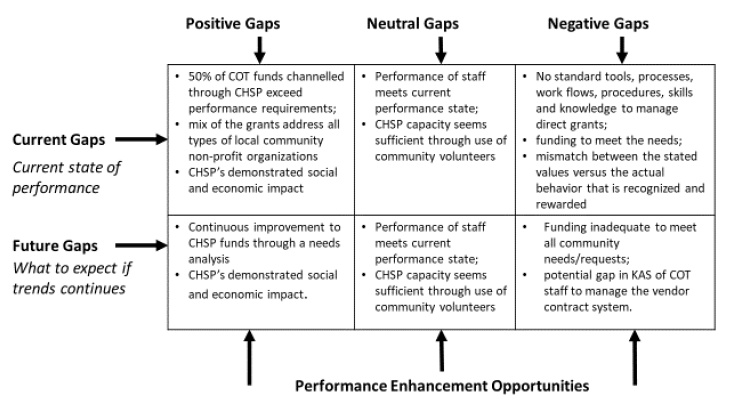
Example 1: Gap Analysis (Excerpt)
This excerpt shows my contribution to the Gap and Cause Analysis report and identifies the performance gaps between the organization’s current state of performance and expected performance states using Rothwell’s six-cell gap analysis. It was used by the team to identify performance goals and design interventions.
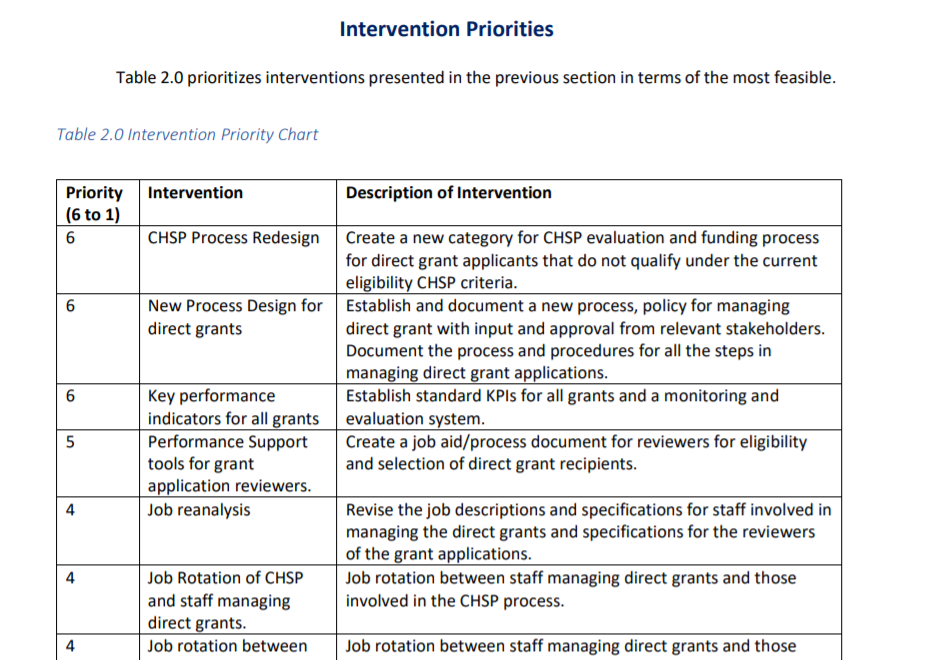
Example 2: Intervention Priorities (Excerpt)
This excerpt shows my contribution to the Intervention Selection report, and details potential interventions to address the cause of the performance gaps and prioritizes them by feasibility.
 Tim Ries